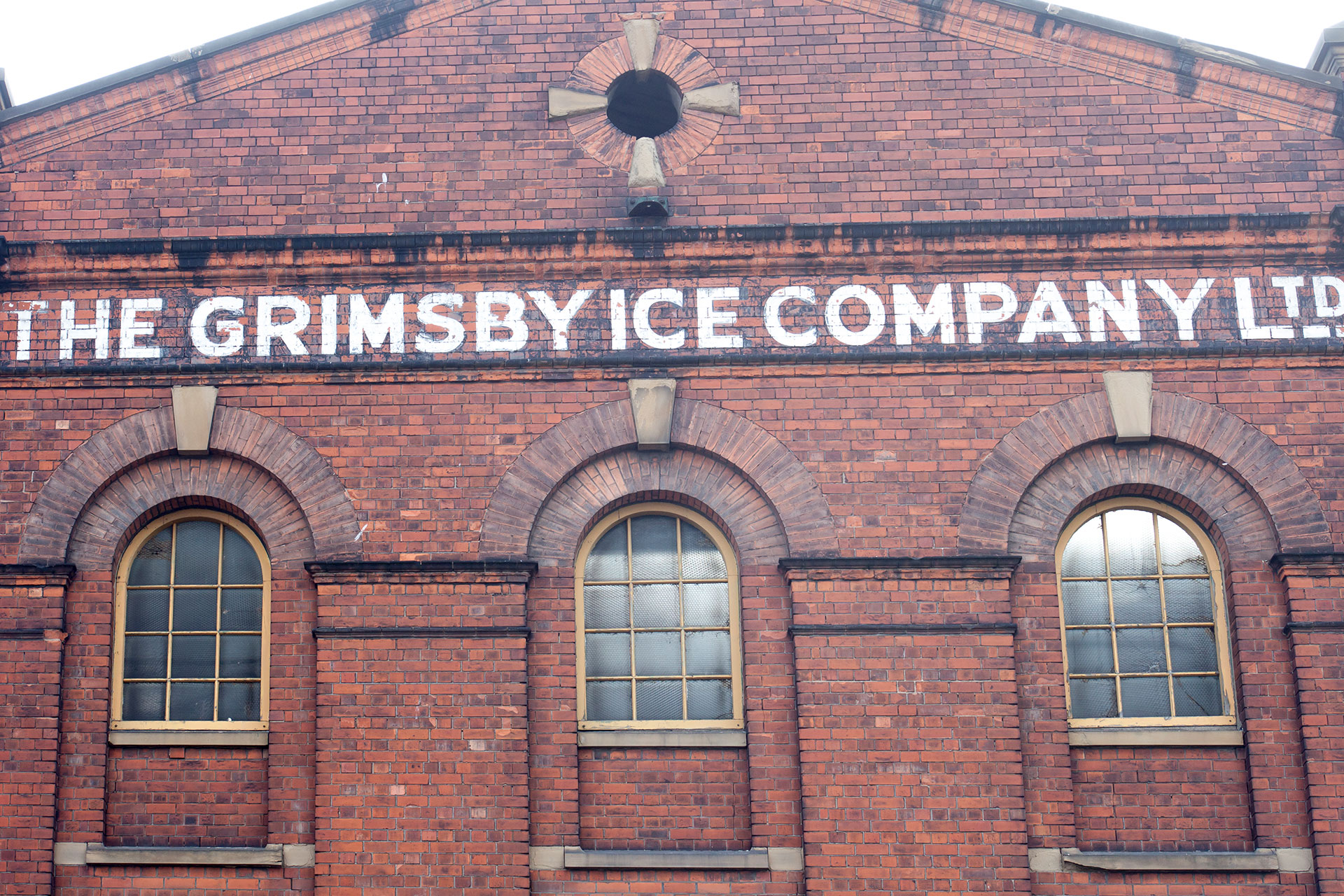
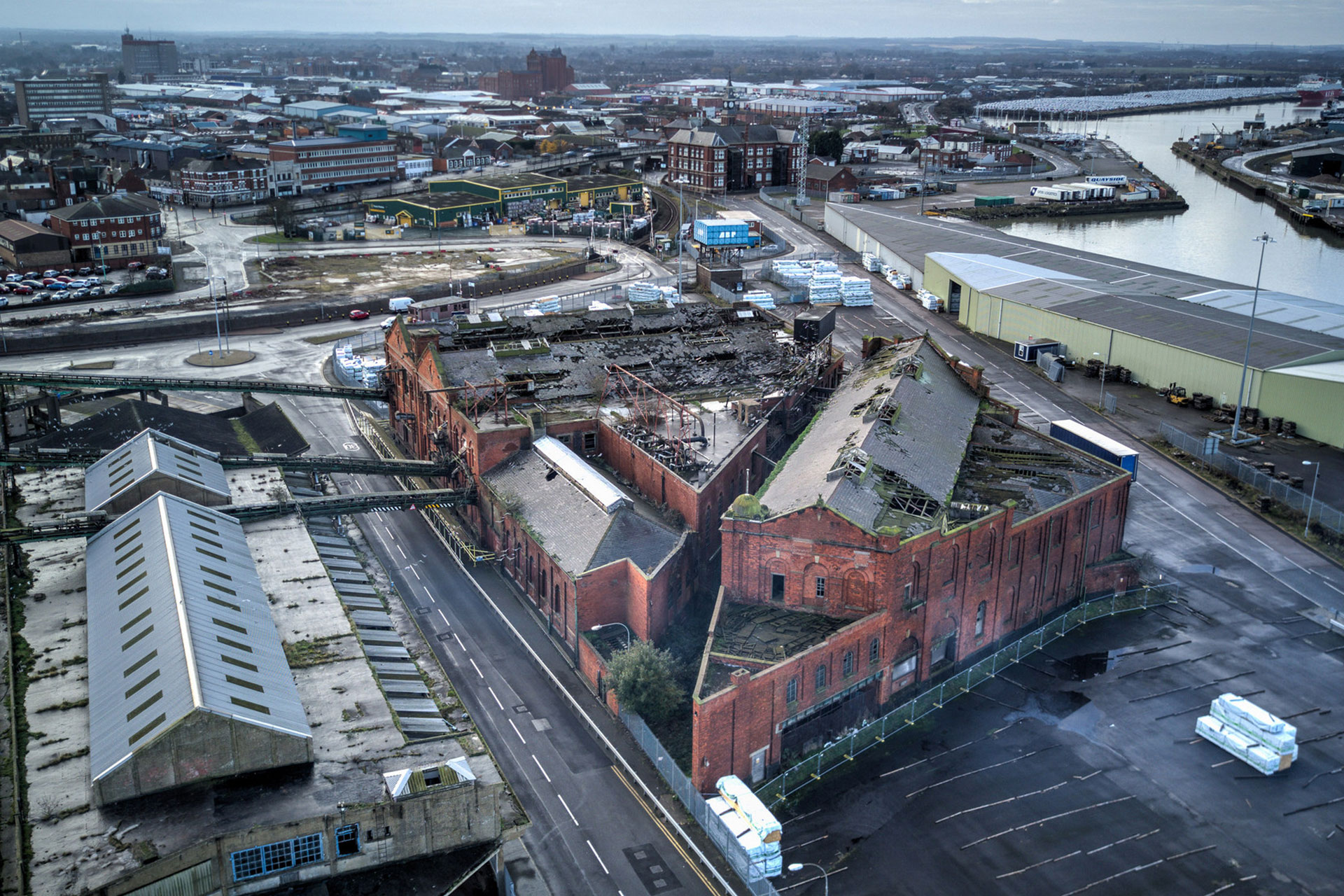
The Grimsby Ice Factory is a unique heritage asset, of international importance, situated on Grimsby’s historic dock peninsula.
THE EXPANSION OF THE FISHING TRADE
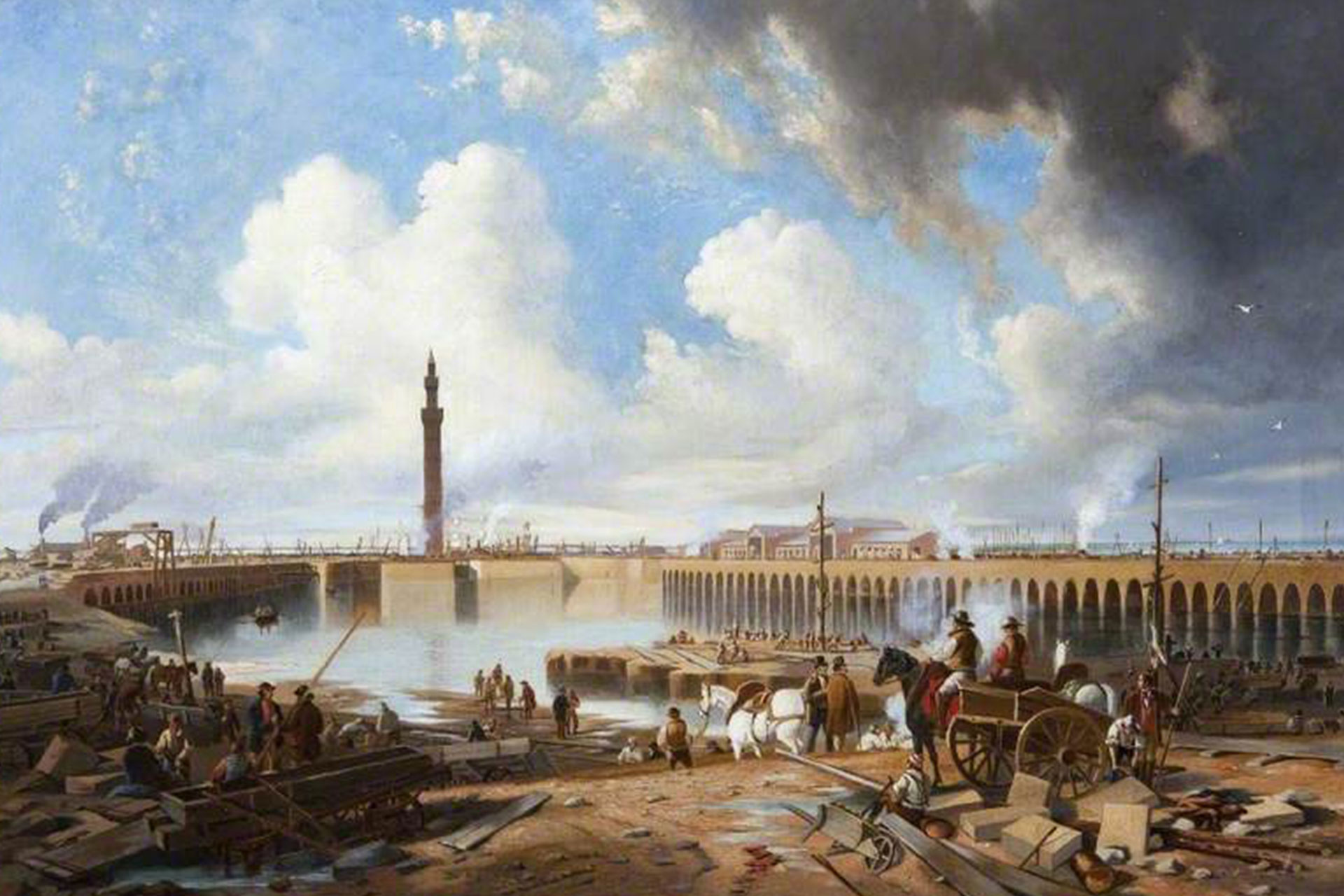
With the arrival of the railway in 1848, and the development of Grimsby Docks – beginning with the Royal Dock in 1852 – came a rapid expansion of the fishing trade. The need for ice, to supply the merchants and fishing boats, could barely be met by small local manufacturers and imported ice from Norway. The Grimsby Ice Company was formed, and plans were made to build the Grimsby Ice Factory.
Begun in 1900, and extended in 1910, at its peak in the 1950s the Grimsby Ice Factory was producing up to 1200 tons of ice every day. This capacity to preserve the freshness of the catch helped to make Grimsby the busiest fishing port in the world. It is no exaggeration to say that the fortunes of the town during this period depended upon the Grimsby Ice Factory.
THE SCIENCE
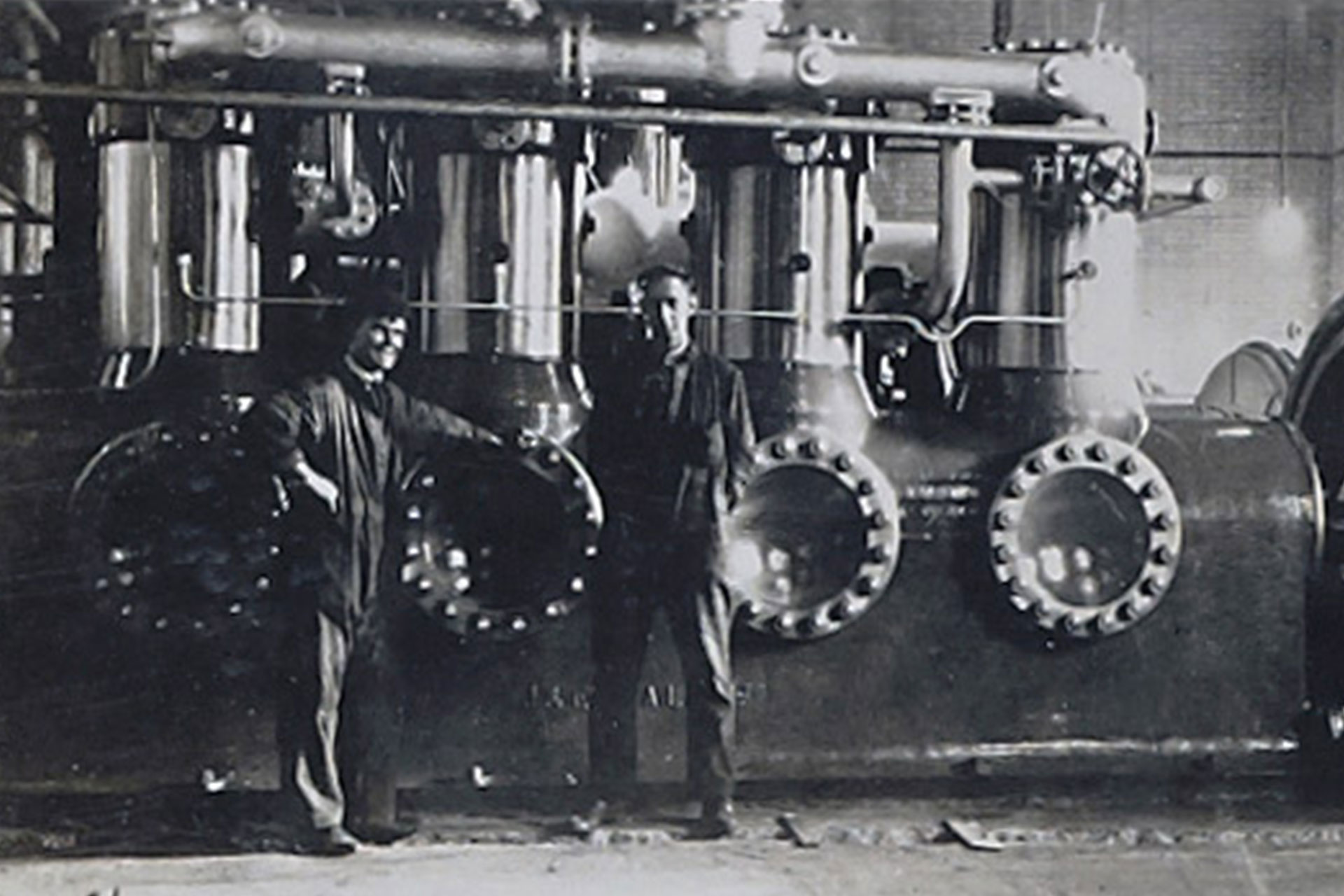
The factory first used steam to power the Pontifex (and later Linde) Ammonia compressors which made the ice. As demand for ice increased, two more tank rooms were added, between 1907 and 1910. In 1930, a modernisation programme began. Metropolitan-Vickers of Manchester was commissioned to provide new electric generators and J & E Hall of Dartford, Kent won the contract to replace the refrigeration equipment. The factory expanded once more in the early 1950’s, with a seventh tank room being built.
OWNERSHIP
The original owner, the Grimsby Ice Company, was an amalgamation of the Great Grimsby Ice Company and the Grimsby Co-operative Ice Company. The company maintained ownership for the next seventy years, when the factory was transferred to a sister company, The Grimsby Exchange, Ltd.
As technology changed, and the fishing fleet was reduced, the need for block ice declined. Production at the Ice Factory gradually diminished, and the factory closed in 1990. At that time, ownership of the factory reverted to the landowner, Associated British Ports (ABP), who had acquired Grimsby and Immingham Docks in the 1980‘s when the British Transport Docks Board was privatised.
In 2020 the Ice Factory building with surrounding land and No 2 Dock was purchased from ABP by investor Tom Shutes and his company GY 1900 Ltd.
THE HERITAGE
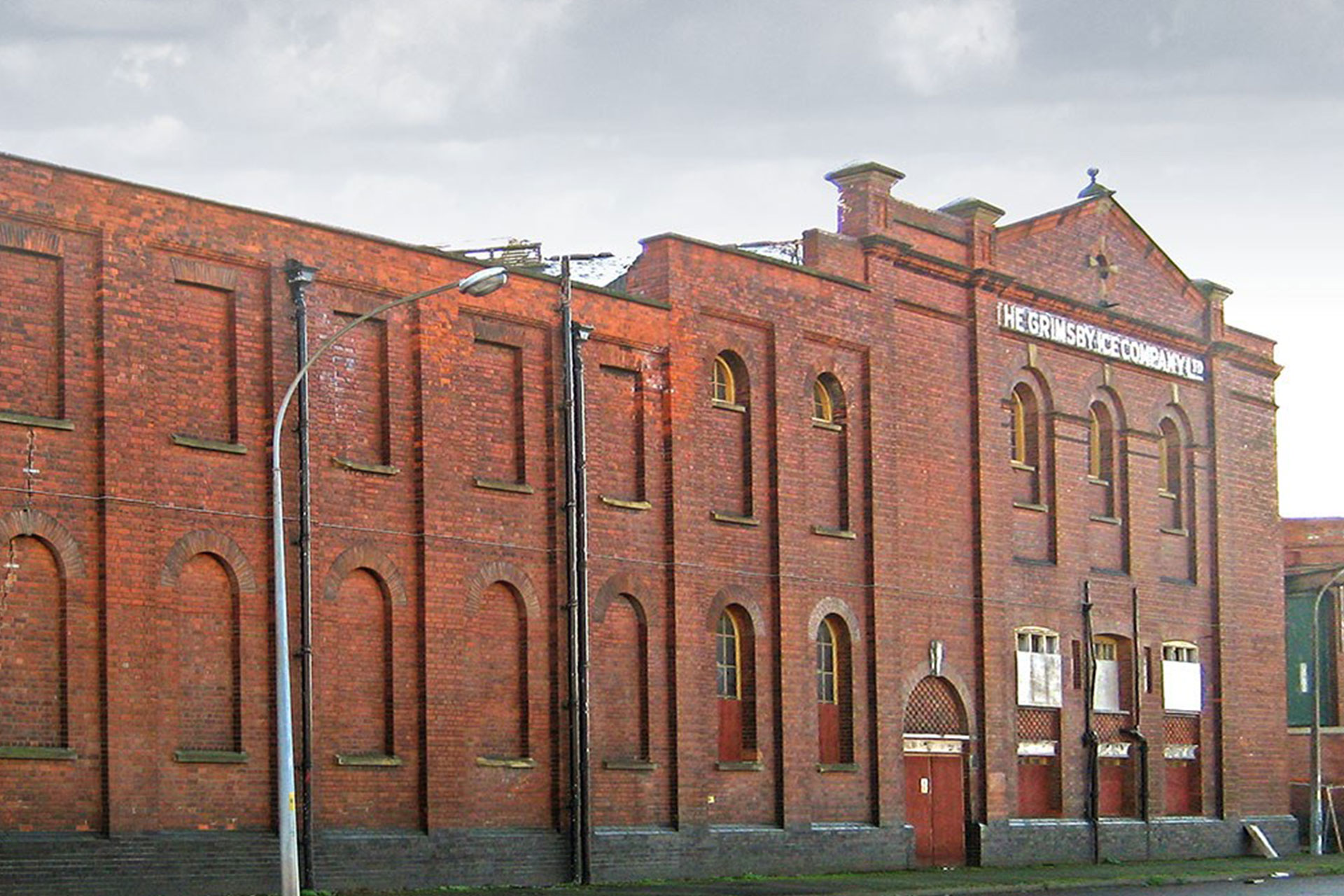
The Grimsby Ice Factory is a unique survivor of the Victorian industrial era. This gigantic ice-making machine, with a footprint of over an acre, is thought to be the earliest and largest known surviving ice factory in the world, and the sole survivor from this period to retain its machinery. It is possible, touring the building, to trace the entire ice-making process as carried out in the early 20th century. Notwithstanding its solely practical purpose, the factory was built with an attention to detail worthy of the best Victorian industrial architecture, and now this imposing brick building, with its recessed arched bays, pediments, and other extravagant features, awaits restoration. But for the efforts of local activists, it would have been demolished soon after closing in 1990.
PRESERVATION
In September 1990, at the instigation of local architect Rex Critchlow, the Grimsby Ice Factory buildings were spot listed as Grade II. ABP subsequently applied to English Heritage to have the preservation order lifted, to allow them to demolish the buildings. The result was a review of the listing, and an upgrade to Grade II* on 12, August 1993.
Since then the building was abandoned and not maintained. It was identified as a building at risk on the English Heritage “Heritage at Risk” register in 1992 where its condition is now described as ‘very bad’ and it is priority assessed as A – the highest priority for action. As a result of this neglect, it suffered from an ever worsening condition. As of 2026 the roof is open to the elements, so rainwater “cascades through the buildings from top to bottom.” (Purcell, Miller Tritton). Thieves have stripped whatever metal they can find – in particular the copper from the cupola, and from the electrical fittings. According to Alan Baxter Associates, who completed an appraisal of the structure in 2010, the buildings had missed their last two major overhauls, and were now deteriorating at a rapidly increasing rate. Such was the state of parts of the buildings that in 2007 they made the ideal setting for scenes in war-torn Dunkirk, for the film “Atonement.” The intervening years only exacerbated the situation.
RE-USING THE BUILDING
During the 1990’s, following advice from a Conservation Consultant, ABP actively marketed the buildings for sale, and there was interest from two local entrepreneurs. Unfortunately, neither of the schemes progressed, and the buildings continued to deteriorate.
In 2010 North East Lincolnshire Council (NELC) and ABP jointly commissioned the structural appraisal referenced above, and a Conservation Statement (a summary of the heritage value of the building and its contents), with a view to re-opening the case for demolition. A public meeting was organised by the Grimsby, Cleethorpes & District Civic Society to gather local views, which revealed that about equal numbers of concerned residents supported either getting rid of the “eyesore” that the factory had become, or preserving the building for future generations. In July of that year the Great Grimsby Ice Factory Trust (GGIFT) was formed with the purpose of finding a sustainable new use for the Ice Factory. Since then the building has had the support of numerous organisations including The Prince’s Regeneration Trust, SAVE Britain’s Heritage, The Council for British Archaeology, The World Monuments Fund, The Victorian Society and Europa Nostra. The Ice Factory has featured in numerous publications, radio and television shows, and attracted national and international attention by being included in the following lists:
In 2013 GGIFT raised funds to commission an options appraisal, which served as the basis for a bid to the Heritage Lottery Fund (HLF) to fund a mixed-use development that would have secured the future of the building, but unfortunately the bid was not successful.
In 2018 the Ice Factory was included within the boundaries Historic England’s new Greater Grimsby Heritage Action Zone (HAZ), a five year programme to support the preservation of Grimsby’s heritage buildings, and, in partnership with NELC and ABP, specifically bring funding to the historic dock area.
In 2020 the Ice Factory building and surrounding area were purchased from ABP by a private investor, who plans to develop a conference and business centre.